앞으로 2년 동안은 가격의 점진적인 상승을 예상하며 , 향후에는 가격이 하락 or 조정 국면에 들어갈 것으로 예상
앞으로 2년간 점진적인 가격 상승예상은
미국내 실업률의 점진적인 하락 및
국채 소득율 2 YEAR / 10 YEAR 의 낮음
LOW INFLARION RATE
기타 세부 적인 사항은 아래 자료 참조
Home Prices to Level Off and Reverse Course Within 2 Years - Analysts
Jul 21 2014, 12:51PM
Two Bank of America Merrill Lynch (BAML) analysts are defending what they call their big high conviction views for what should happen in the housing world over the next two years. Chris Flanagan and Gregory Fitter, ABS and MBS strategists say that their views are not mainstream but that recent data has corroborated their theories.
The two contend that home price increases will continue to moderate from the skyrocket trajectory they were on in late 2012 and early 2013 will peak in mid-2016. Second, as unemployment continues to ease, the yield curve will continue to flatten (longer term rates getting lower while shorter term rates get higher, relative to each other) and the spread between two year and 10 year treasury yields should be at zero by the time home prices peak. The long end of the curve will remain at surprising low yields, fostered by a soft housing market and low inflation.
The first "big view", that home prices will peak in two years is validated they say by the most recent income based home price model from Case Shiller. Charts 1 and 2 includes the Case Shiller historical and forecasted home price index (HPI) along with the BoA strategists' estimate of fair value. This model shows that the HPI will increase from the first quarter 2014 level of 155.5 to a peak of 167.3 in the third quarter of 2016. This is an annualized growth of 3 percent over 30 months compared to 11 percent in 2013 and the 9.5 percent annualized rate since prices bottomed in the fourth quarter of 2011. Then prices are expected to decline and not recover to the 2016 level until Q2 2022, an annualized rate of price growth over six years of 0. With this factored in, the annualized home price growth rate between Q1 2014 and Q2 2022 is expected to be 1.0 percent.
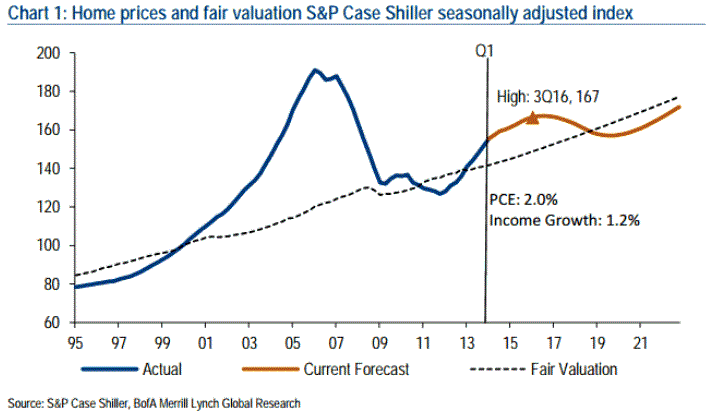
The authors estimate that the Case-Shiller HPI was already 9.7 percent over valued in the first quarter of this year when compared to the author's fair value estimate and that it was 6.2 percent undervalued when it hit bottom in 2011, a 16 percent swing in valuation in two years. The last time such a rate of acceleration was observed was in 2002, the beginning of the housing bubble. The author's model projects that prices will be overvalued by 12 percent late next year or early in 2016 and this will eventually lead prices to fall, probably below fair value.
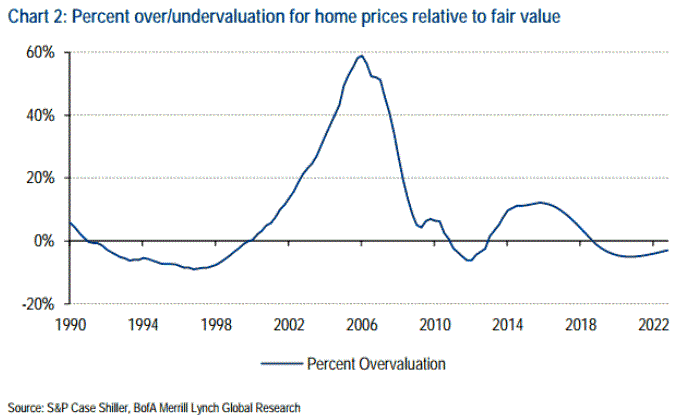
The projected reversion to fair value mirrors what happened before, during, and after the housing crisis, but at a lower level of reevaluation. During the early 2000s housing boom overvaluation peaked in Q1 2006 at 58.9 percent before prices declined by 34 percent, overshooting fair value at the bottom end. It will be very different this time, primarily due to the regulatory framework, most notably Dodd-Frank, which has been put in place in response to that boom and bust. After peaking this time, they expect prices to remain flat or unchanged for six years, not plummet as happened ten years before; exactly what the regulatory framework was meant to do. "From that perspective," they say, "0% home price growth from 2016-2022 seems to us to be a fantastic outcome and exactly what policymakers had hoped for when establishing the new regulatory framework."
Given this scenario the authors ask what the catalyst might be for increasing interest rates. If anything, they way, even lower rates seem more plausible; "it is difficult for us to see what generates any meaningful, sustainable increase in interest rate volatility."
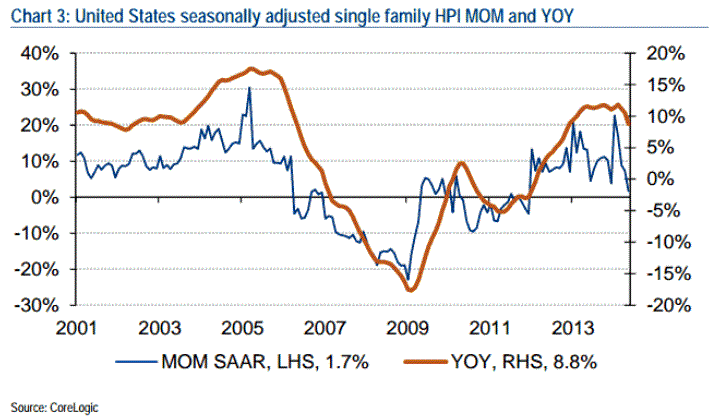
The authors also cite the May CoreLogic report issued in early July as further substantiation of their theory of slowing price growth. CoreLogic, with data more recent than that provided by Case-Shiller, shows year-over-year (YOY) home price growth for May of 8.8 percent, down 3 percentage points from February's 11.8 percent which the authors believe will prove to be the cyclical peak. Annual growth of 11.5 percent had persisted since early 2013. The decline from the February "peak" started in March and accelerated to the downside in May.
Likewise, the annualized month-over-month (MOM) data slowed temporarily after mortgage rates went up in mid-2013 from the 20 percent level early in the year. While January and February 2014 were exceptionally strong at rates of 26.0 and 16 percent respectively growth then began to slow. MOM data for May showed an increase of 1.7 percent following 2.4 percent in April. Flanagan and Fitter said that CoreLogic's April and May readings suggest that their own model calling for a 3 percent rate of price growth for 2.5 years followed by 1 percent for the next eight years is beginning to be realized.
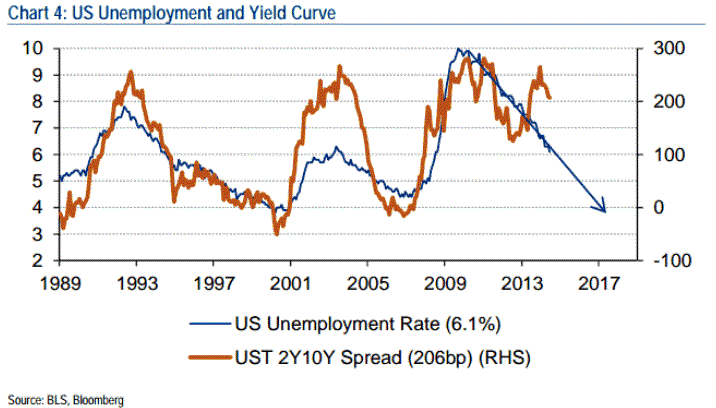
Their second view that massive yield curve flattening began with the new year and will continue until the 2 and 10 year spreads hit zero in 2016 is bolstered by the most recent unemployment report. Chart 4 shows their view of the relationship between unemployment and the two yield curve spreads. The unemployment rate has been declining in a fairly linear manner since the peak in October 2009. Extrapolating the decline forward, they estimate that unemployment will hit 5 percent in 2015 and 4 percent in early 2017. Historically it has not been long after unemployment drops below 5 percent that the 2 and 10 year spreads approach or drop below zero.
The analysts concede Fed Chairperson Janet Yellen's concerns about labor market slack could mean it will be different this time, but they hold to their theory; that declining unemployment will force the Fed to act and those zero rates will be obtained on the schedule they project.
The two contend that home price increases will continue to moderate from the skyrocket trajectory they were on in late 2012 and early 2013 will peak in mid-2016. Second, as unemployment continues to ease, the yield curve will continue to flatten (longer term rates getting lower while shorter term rates get higher, relative to each other) and the spread between two year and 10 year treasury yields should be at zero by the time home prices peak. The long end of the curve will remain at surprising low yields, fostered by a soft housing market and low inflation.
The first "big view", that home prices will peak in two years is validated they say by the most recent income based home price model from Case Shiller. Charts 1 and 2 includes the Case Shiller historical and forecasted home price index (HPI) along with the BoA strategists' estimate of fair value. This model shows that the HPI will increase from the first quarter 2014 level of 155.5 to a peak of 167.3 in the third quarter of 2016. This is an annualized growth of 3 percent over 30 months compared to 11 percent in 2013 and the 9.5 percent annualized rate since prices bottomed in the fourth quarter of 2011. Then prices are expected to decline and not recover to the 2016 level until Q2 2022, an annualized rate of price growth over six years of 0. With this factored in, the annualized home price growth rate between Q1 2014 and Q2 2022 is expected to be 1.0 percent.
The authors estimate that the Case-Shiller HPI was already 9.7 percent over valued in the first quarter of this year when compared to the author's fair value estimate and that it was 6.2 percent undervalued when it hit bottom in 2011, a 16 percent swing in valuation in two years. The last time such a rate of acceleration was observed was in 2002, the beginning of the housing bubble. The author's model projects that prices will be overvalued by 12 percent late next year or early in 2016 and this will eventually lead prices to fall, probably below fair value.
The projected reversion to fair value mirrors what happened before, during, and after the housing crisis, but at a lower level of reevaluation. During the early 2000s housing boom overvaluation peaked in Q1 2006 at 58.9 percent before prices declined by 34 percent, overshooting fair value at the bottom end. It will be very different this time, primarily due to the regulatory framework, most notably Dodd-Frank, which has been put in place in response to that boom and bust. After peaking this time, they expect prices to remain flat or unchanged for six years, not plummet as happened ten years before; exactly what the regulatory framework was meant to do. "From that perspective," they say, "0% home price growth from 2016-2022 seems to us to be a fantastic outcome and exactly what policymakers had hoped for when establishing the new regulatory framework."
Given this scenario the authors ask what the catalyst might be for increasing interest rates. If anything, they way, even lower rates seem more plausible; "it is difficult for us to see what generates any meaningful, sustainable increase in interest rate volatility."
The authors also cite the May CoreLogic report issued in early July as further substantiation of their theory of slowing price growth. CoreLogic, with data more recent than that provided by Case-Shiller, shows year-over-year (YOY) home price growth for May of 8.8 percent, down 3 percentage points from February's 11.8 percent which the authors believe will prove to be the cyclical peak. Annual growth of 11.5 percent had persisted since early 2013. The decline from the February "peak" started in March and accelerated to the downside in May.
Likewise, the annualized month-over-month (MOM) data slowed temporarily after mortgage rates went up in mid-2013 from the 20 percent level early in the year. While January and February 2014 were exceptionally strong at rates of 26.0 and 16 percent respectively growth then began to slow. MOM data for May showed an increase of 1.7 percent following 2.4 percent in April. Flanagan and Fitter said that CoreLogic's April and May readings suggest that their own model calling for a 3 percent rate of price growth for 2.5 years followed by 1 percent for the next eight years is beginning to be realized.
Their second view that massive yield curve flattening began with the new year and will continue until the 2 and 10 year spreads hit zero in 2016 is bolstered by the most recent unemployment report. Chart 4 shows their view of the relationship between unemployment and the two yield curve spreads. The unemployment rate has been declining in a fairly linear manner since the peak in October 2009. Extrapolating the decline forward, they estimate that unemployment will hit 5 percent in 2015 and 4 percent in early 2017. Historically it has not been long after unemployment drops below 5 percent that the 2 and 10 year spreads approach or drop below zero.
The analysts concede Fed Chairperson Janet Yellen's concerns about labor market slack could mean it will be different this time, but they hold to their theory; that declining unemployment will force the Fed to act and those zero rates will be obtained on the schedule they project.